I have another website where I've posted my Top 100 Classical Music Favorites -- HERE -- and once per week on that site, I listen to and comment on a piece of music I've never heard before -- HERE.
Recently I listened to a three-movement piece called "Different Trains" by American composer Steve Reich, and in that post, I mention an article I found at ClassicFM.com on "The Best American Classical Music" (HERE).
The ClassicFM list includes twenty works, and one of them is 4'33" by composer John Cage.
Have you ever heard that piece?
I suspect not -- since 4'33" is four minutes and thirty-three seconds of silence. That's right. The score for 4'33" instructs performers not to play their instrument(s) for the entire duration of the piece throughout its three movements.
ClassicFM included that work on a list of "BEST" American classical music and said this:
"If you thought 4'33" was just three movements of silence, think again. John Cage, one of America's most influential 20th century composers, considered it his most important work. He was playing with the idea of what music 'is' - and as far as 4'33" is concerned, that includes any type of sound, whether it's played by an instrument or not."
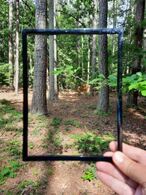
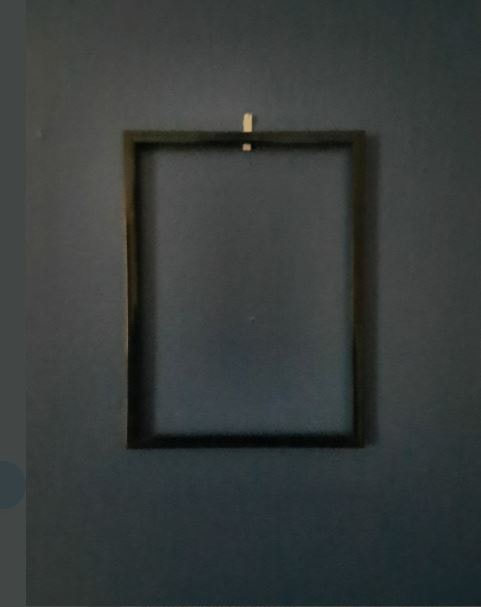
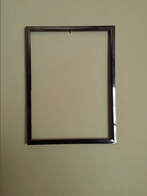
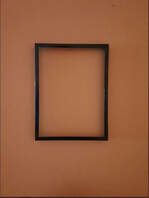
The inclusion of John Cage’s opus of dead air (albeit, excluding the natural and hushed sounds of concert-goers breathing and coughing and perhaps the hum of an HVAC system) on a list of BEST American music inspired me to create a similar work of visual art which I have entitled “5 x 7." I have posted photographs of it below. I honestly think this magnum opus will take the art world by storm as it plays with the idea of what art “is.”
Below from left to right: My new masterpiece "5x7." As you can see, this is an incredible piece, and its mood changes dramatically, depending upon which wall it is hung.
Recently I listened to a three-movement piece called "Different Trains" by American composer Steve Reich, and in that post, I mention an article I found at ClassicFM.com on "The Best American Classical Music" (HERE).
The ClassicFM list includes twenty works, and one of them is 4'33" by composer John Cage.
Have you ever heard that piece?
I suspect not -- since 4'33" is four minutes and thirty-three seconds of silence. That's right. The score for 4'33" instructs performers not to play their instrument(s) for the entire duration of the piece throughout its three movements.
ClassicFM included that work on a list of "BEST" American classical music and said this:
"If you thought 4'33" was just three movements of silence, think again. John Cage, one of America's most influential 20th century composers, considered it his most important work. He was playing with the idea of what music 'is' - and as far as 4'33" is concerned, that includes any type of sound, whether it's played by an instrument or not."
The inclusion of John Cage’s opus of dead air (albeit, excluding the natural and hushed sounds of concert-goers breathing and coughing and perhaps the hum of an HVAC system) on a list of BEST American music inspired me to create a similar work of visual art which I have entitled “5 x 7." I have posted photographs of it below. I honestly think this magnum opus will take the art world by storm as it plays with the idea of what art “is.”
Below from left to right: My new masterpiece "5x7." As you can see, this is an incredible piece, and its mood changes dramatically, depending upon which wall it is hung.
 |  |  |  |
If you have any interest in making an offer to own this one-of-a-kind piece, please let me know a.s.a.p. -- as I am sure it will go quickly!
By the way -- the ClassicFM list inspired me to create my own list of the Top 20 Best Pieces of American Classical Music -- and here it is (NOTE: The pieces are not ranked -- they're just my twenty favorites):
1. The score from West Side Story by Leonard Bernstein
2. Appalachian Spring by Aaron Copland
3. Stars & Stripes Forever by John Philip Sousa
4. Adagio for Strings by Samuel Barber
5. Variations on America by Charles Ives
6. Rhapsody in Blue by George Gershwin
7. Suite of Old American Dances by Robert Russell Bennett
8. Piano Concerto in F by George Gershwin
9. Scene d'Amour from "Vertigo" by Bernard Herrmann
10. Maple Leaf Rag by Scott Joplin
11. Ashokan Farewell by Jay Ungar
12 Beautiful Dreamer by Stephen Foster
13. Theme from The Magnificent Seven by Elmer Bernstein
14. Rodeo by Aaron Copland
15. The soundtrack to Star Wars' "A New Hope" by John Wiliams
16. Three Dances from "On the Town" by Leonard Bernstein
17. Washington Post March by John Philip Sousa
18. The Desert Music by Steve Reich
19. Overture to Candide by Leonard Bernstein
20. Breakfast Machine by Danny Elfman*
* If ClassicFM can have 4' 33" on their list, then I can have Breakfast Machine on mine!
By the way -- the ClassicFM list inspired me to create my own list of the Top 20 Best Pieces of American Classical Music -- and here it is (NOTE: The pieces are not ranked -- they're just my twenty favorites):
1. The score from West Side Story by Leonard Bernstein
2. Appalachian Spring by Aaron Copland
3. Stars & Stripes Forever by John Philip Sousa
4. Adagio for Strings by Samuel Barber
5. Variations on America by Charles Ives
6. Rhapsody in Blue by George Gershwin
7. Suite of Old American Dances by Robert Russell Bennett
8. Piano Concerto in F by George Gershwin
9. Scene d'Amour from "Vertigo" by Bernard Herrmann
10. Maple Leaf Rag by Scott Joplin
11. Ashokan Farewell by Jay Ungar
12 Beautiful Dreamer by Stephen Foster
13. Theme from The Magnificent Seven by Elmer Bernstein
14. Rodeo by Aaron Copland
15. The soundtrack to Star Wars' "A New Hope" by John Wiliams
16. Three Dances from "On the Town" by Leonard Bernstein
17. Washington Post March by John Philip Sousa
18. The Desert Music by Steve Reich
19. Overture to Candide by Leonard Bernstein
20. Breakfast Machine by Danny Elfman*
* If ClassicFM can have 4' 33" on their list, then I can have Breakfast Machine on mine!
 RSS Feed
