From our art columnist, Jarvis MacKinnon III:
We’ve had a busy fall and early winter, so we’re a bit behind with some of our posts; however, we have a minute now to provide a quick update on some ELD Museum art news:
We’ve had a busy fall and early winter, so we’re a bit behind with some of our posts; however, we have a minute now to provide a quick update on some ELD Museum art news:
| 1. An anonymous donor purchased a work of art for us by Miami artist Maurizio Cattelan. Entitled “Comedian,” this artwork was on display at the annual showcase Art Basel in Miami Beach, and it now hangs in our corporate offices. Or it did until it rotted and thousands of fruit flies were swarming in our lobby. Pictured at the right: "Comedian," new artwork taped to the wall in the corporate offices of the Emmett Lee Dickinson Museum. | 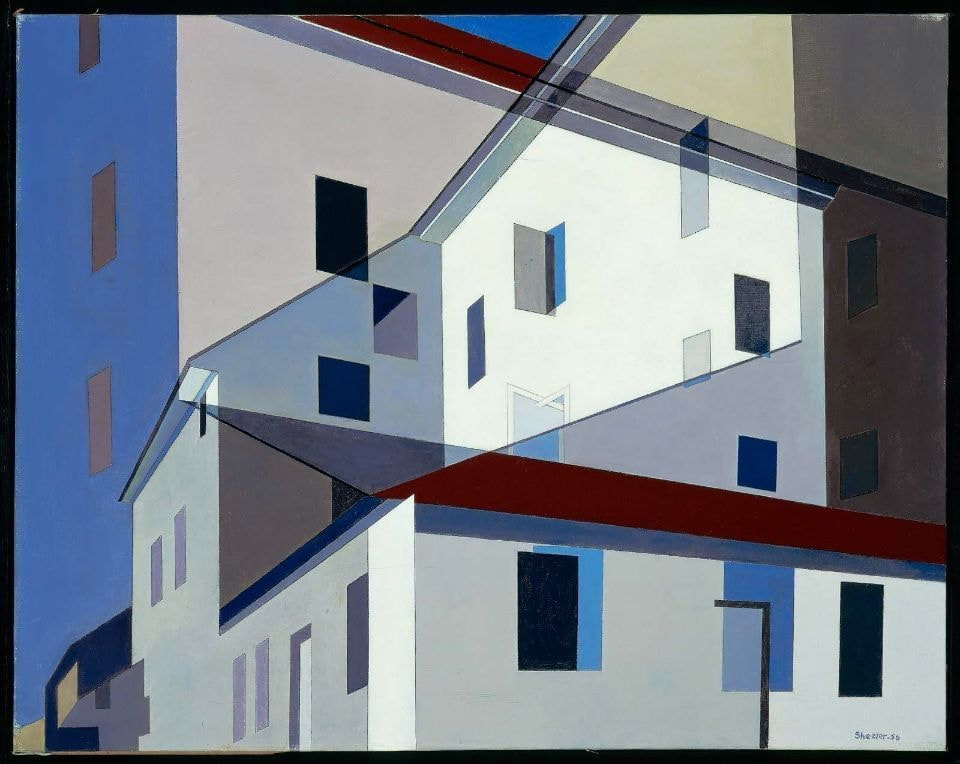 |
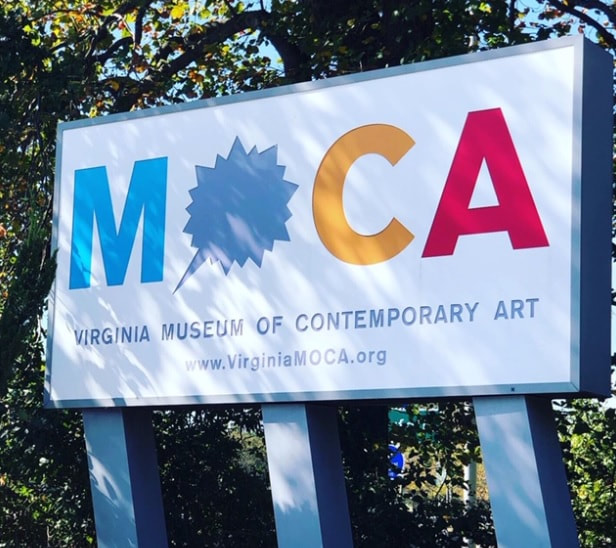
2. In October we had a quick visit to Virginia Beach, and we stopped at the Virginia Museum of Contemporary Art (MOCA). There was a fantastic display of works by artist Michael Kagan, From the MOCA website: This is “the first solo museum exhibition by artist Michael Kagan. Bringing together key paintings from the past decade along with new works, the exhibition Michael Kagan: I Was There When It Happened traces the artist’s lifelong interest in technology, space and innovation.”
Below on the left: Welcome to MOCA -- the Virginia Museum of Contemporary Art Below right: Pics from I Was There When It Happened, paintings by Michael Kagan.
Below on the left: Welcome to MOCA -- the Virginia Museum of Contemporary Art Below right: Pics from I Was There When It Happened, paintings by Michael Kagan.
 | |
The museum had other interesting and even fascinating exhibits (especially an interactive exhibit called Charged which spotlighted artists who incorporate interactive technology in their works), and we we’re particularly delighted to see that an outdoor sculpture garden included a sculpture by Michael Manjarris of the first edition of poetry by Emmett Lee Dickinson (Emily Dickinson's third cousin, twice removed -- at her request).
Below left: Scenes from MOCA Below right: Michael Manjarris' "Poetic Object Series: The Poetry of ELD
| | |
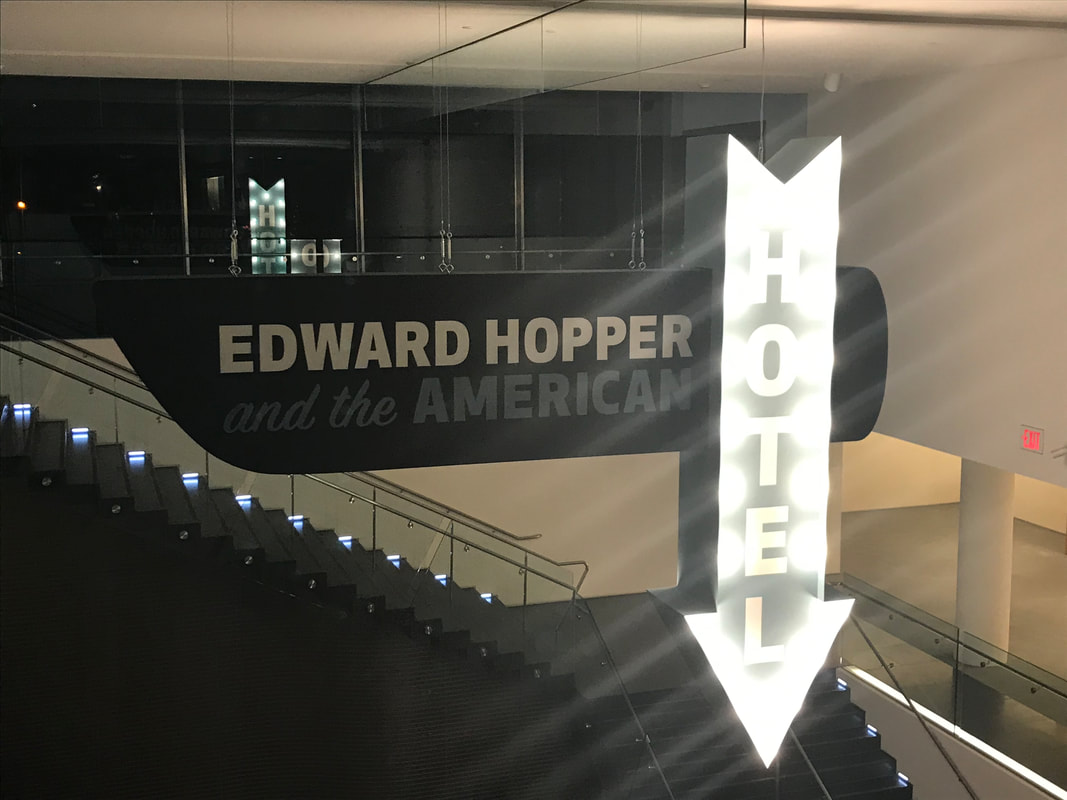
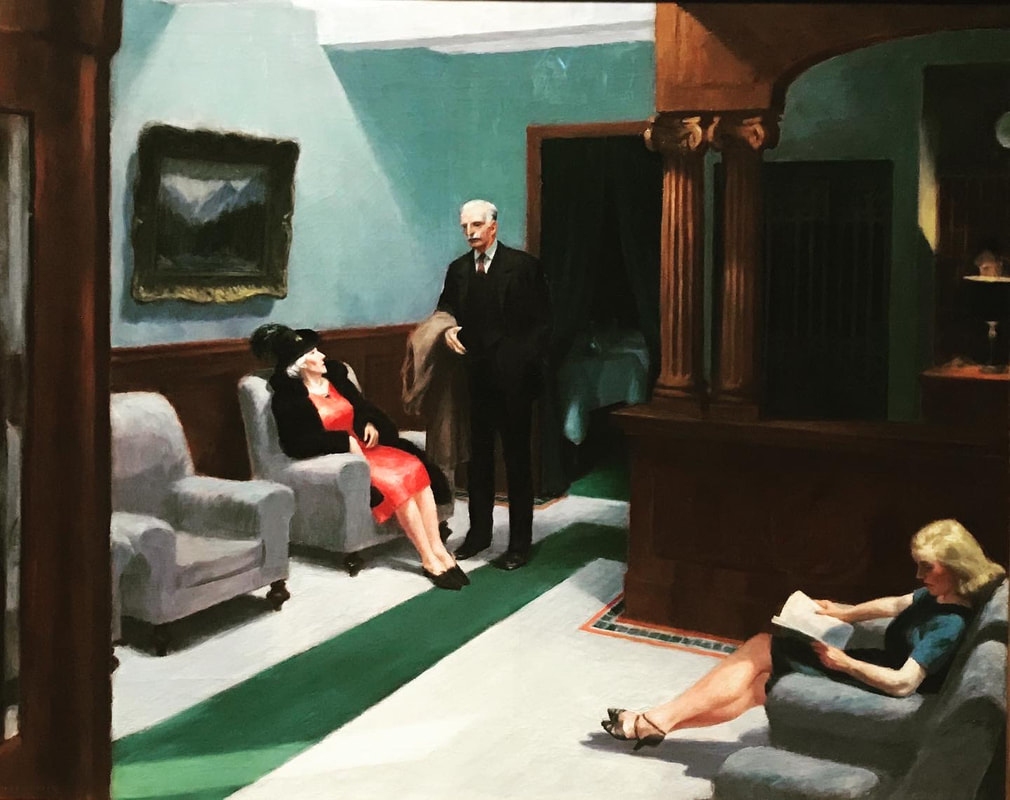
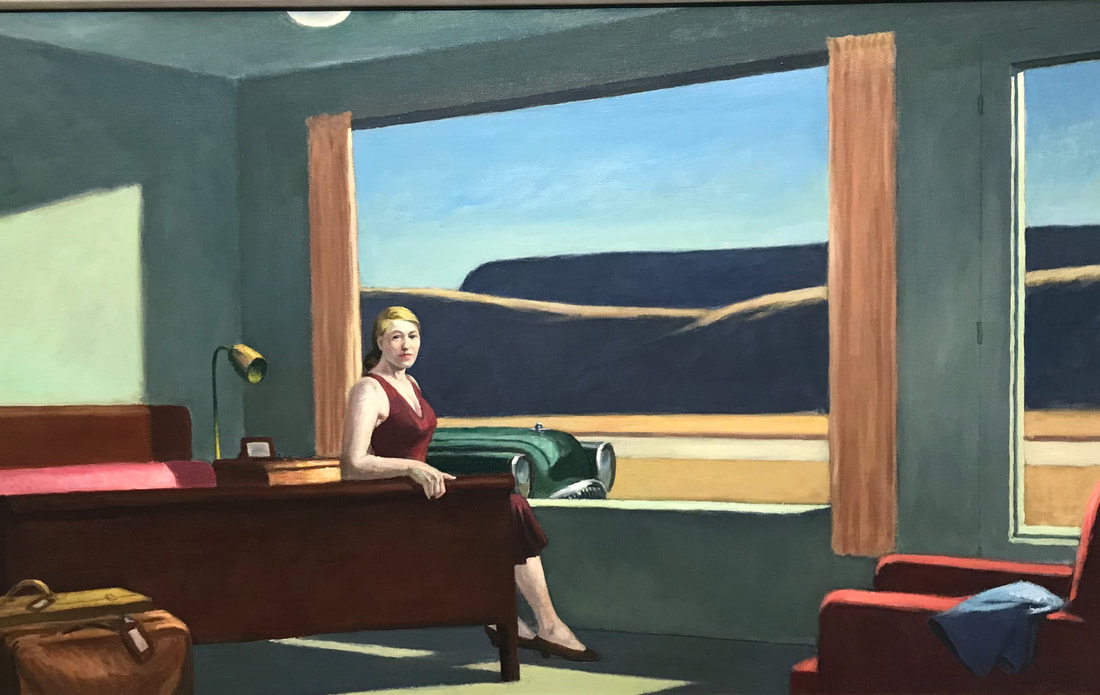
3. For Edward Hopper fans, there is a wonderful exhibit at the Virginia Museum of Fine Arts (VMFA) in Richmond, Virginia, called "Edward Hopper and the American Hotel."
 | |
Edward Hopper was an immense fan of Emmett Lee Dickinson (Emily Dickinson's third cousin, twice removed -- at her request). You can read some of our past posts about the Hopper-Dickinson connection HERE (scroll down to view the various posts), and additional information is HERE (scroll down to the entry dated September 6).
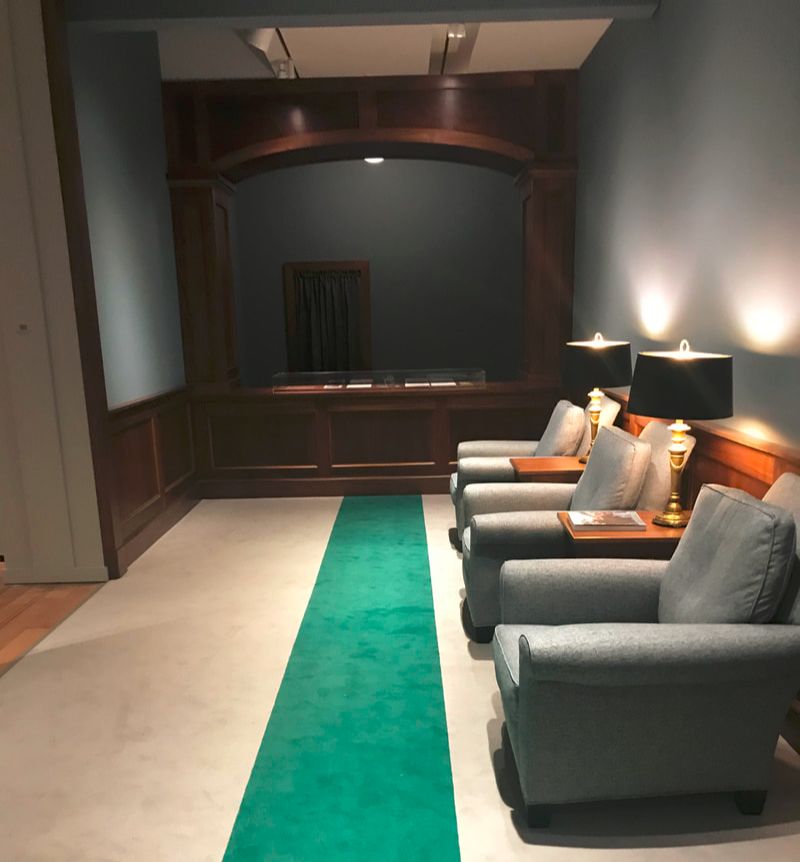
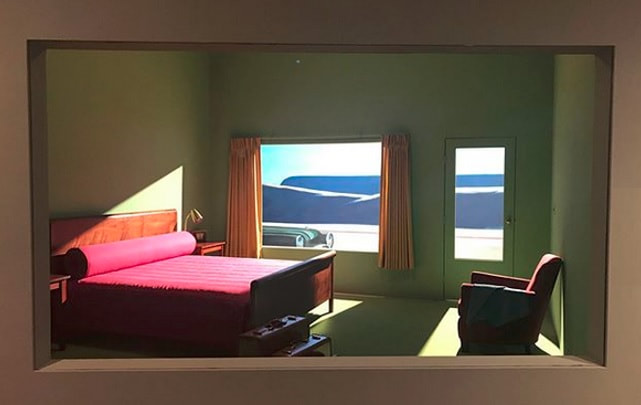
Below: The exhibit includes a Hopper-esque lobby straight out of one of his paintings -- AND -- a recreated motel room where guests who reserved in advance can actually spend a night in the museum.
 |  |
 |  |
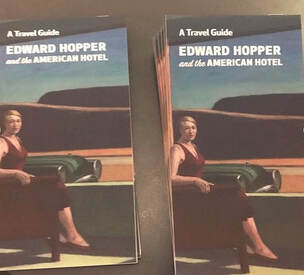
Below left: The exhibit provides as "Travel Guide" as you journey from room to room throughout the exhibit. Below right: The souvenir book includes extras in the back -- two pamphlets about some of Hopper's road trips with his wife, trips that are highlighted and discussed in the show.
 | |
If you're a Hopper fan, don't miss this show! It runs through February 23, 2020,
at the Virginia Museum of Fine Arts in Richmond, VA.
It then travels to the Indianapolis Museum of Art where it will run
from June 6 through September 13, 2020.
at the Virginia Museum of Fine Arts in Richmond, VA.
It then travels to the Indianapolis Museum of Art where it will run
from June 6 through September 13, 2020.
 RSS Feed
