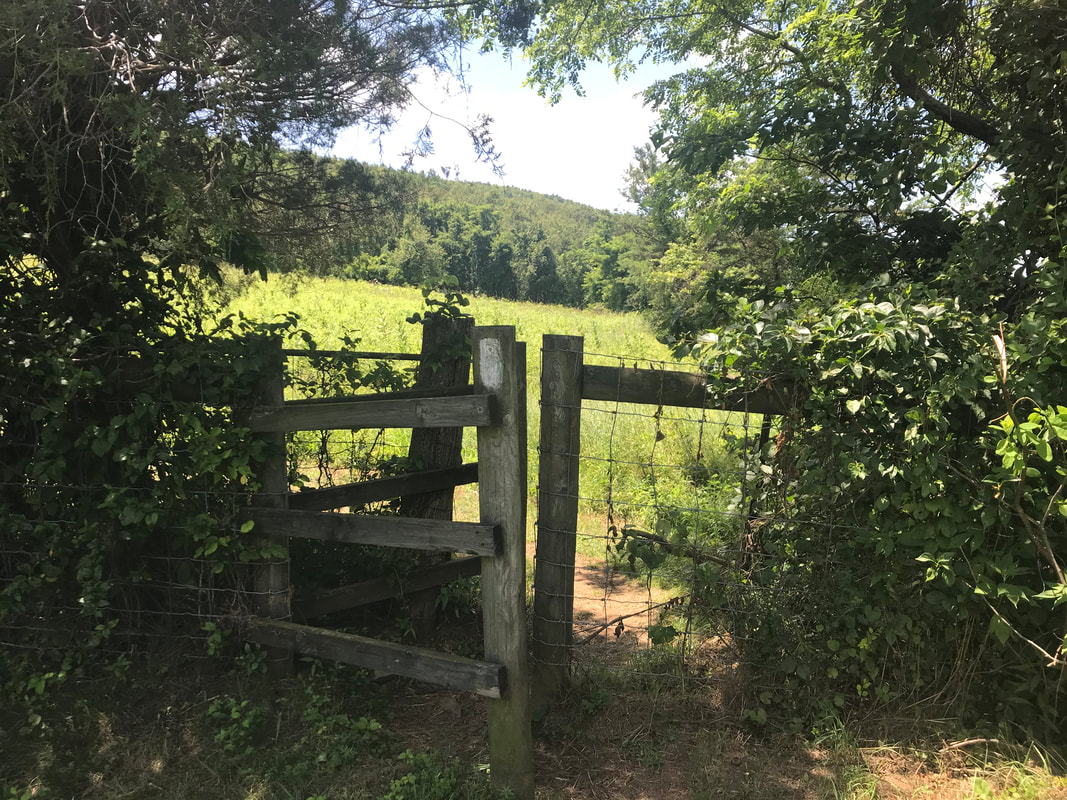
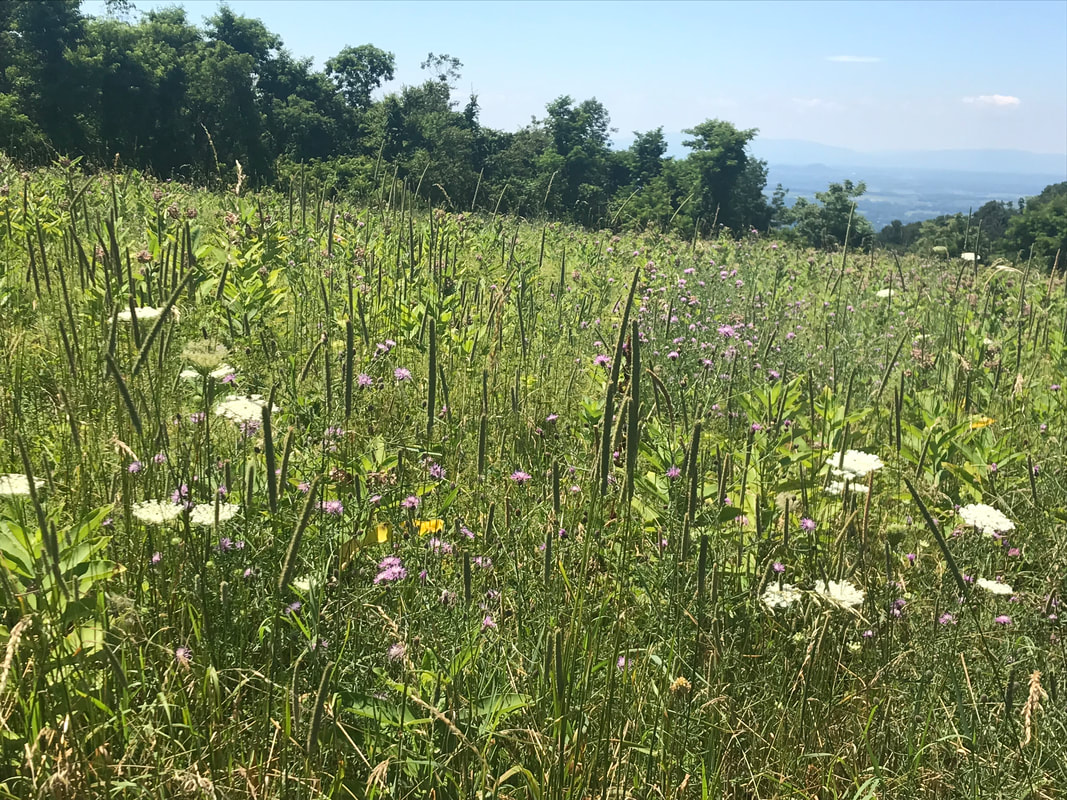
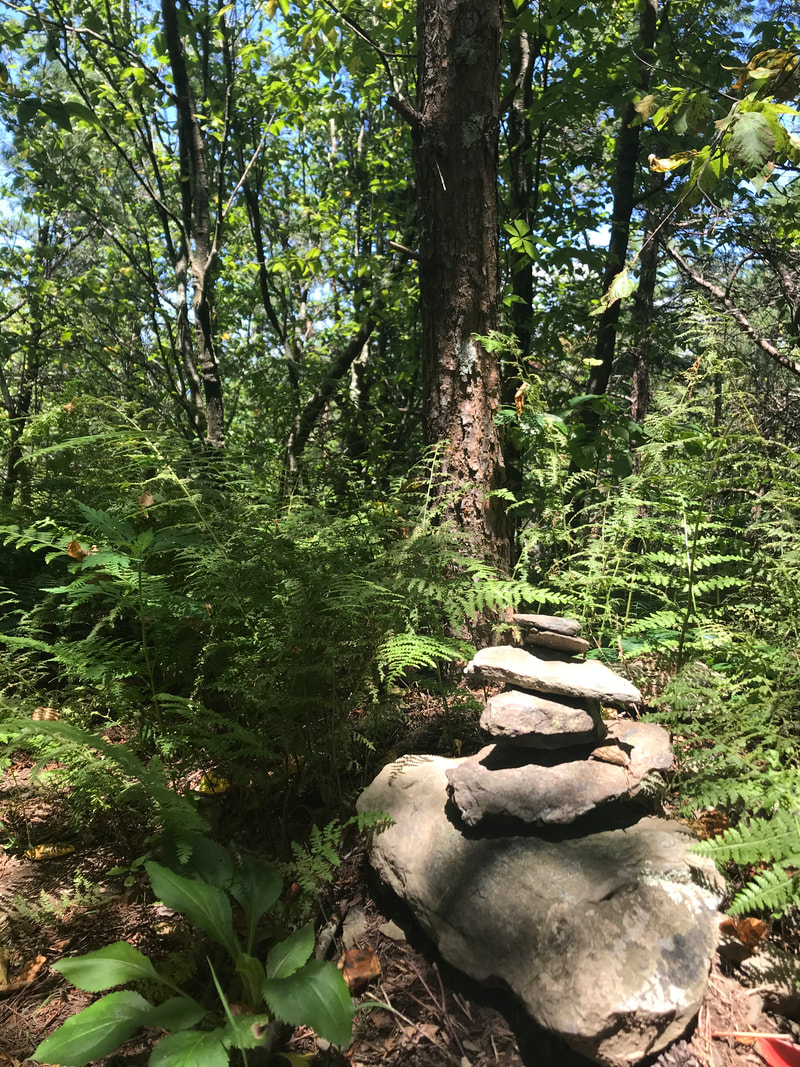
We had such beautiful weather today -- after what feels like two months of rainy and/or hot and humid days (with a thirty-plus stretch of days with over 90-degree temperatures) -- so we thought we'd escape to the mountains. We drove down a stretch of Shenandoah National Park's Skyline Drive, ate lunch on an overlook, and completed two easy-to-moderate hikes, one with a spectacular view and one through a quiet, shady forest. It felt so nice to escape the ugliness and carnage that is Trump's America!
| | By Emily Dickinson: "Nature" is what we see -- The Hill — the Afternoon -- Squirrel — Eclipse — the Bumble bee -- Nay — Nature is Heaven -- Nature is what we hear -- The Bobolink — the Sea -- Thunder — the Cricket -- Nay — Nature is Harmony -- Nature is what we know -- Yet have no art to say -- So impotent Our Wisdom is To her Simplicity. |
One of our walks took us through a forest where years ago a number of magnificent hemlock trees succumbed to a terrible blight. Evidence of the stately trees is still apparent (below right).
| By Emily Dickinson: These Fevered Days – to take them to the Forest Where Waters cool around the mosses crawl – And shade is all that devastates the stillness Seems it sometimes this would be all – | |
| | |
| By Emily Dickinson: The Mushroom is the Elf of Plants -- At Evening, it is not -- At Morning, in a Truffled Hut It stop upon a Spot As if it tarried always And yet its whole Career Is shorter than a Snake's Delay And fleeter than a Tare -- 'Tis Vegetation's Juggler -- The Germ of Alibi -- Doth like a Bubble antedate And like a Bubble, hie -- I feel as if the Grass was pleased To have it intermit -- This surreptitious scion Of Summer's circumspect. Had Nature any supple Face Or could she one contemn -- Had Nature an Apostate -- That Mushroom — it is Him! | 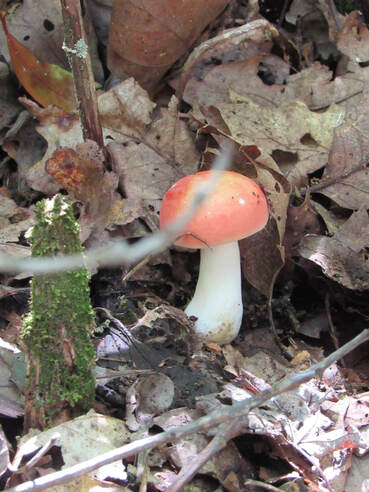 |
 RSS Feed
