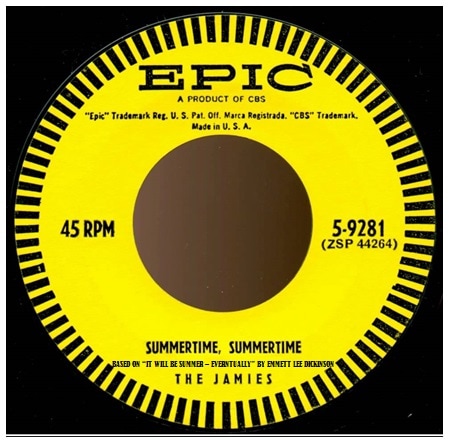
My plan for today was to write about grammar and syntax (LOL – I’ll explain more about that tomorrow…or whenever I get to it), but when I realized that today was both Father’s Day and the first day of summer, I changed course! I ran a search on the word “father” on the Dickinson Archive and 105 results popped up. This represents about 30 poems which use the word “father,” though almost all instances refer to a “Heavenly Father.”
Sister: 6
Brother: 7
Mother: 9
Mama: 1
Grandfather: 1
Papa: 1
Family: 2
Relative: 2 (but in only one does it mean "kin”)
Dickinson never used the words "grandmother," "cousin," "nephew," "niece," "uncle," "aunt," or "sibling" in any of her poems. She did, though, mention herself, her brother and her sister-in-law by name: "Emily" appears in three poems, "Austin" in one, and "Susan" in four poems. The word "sue" appears in seven poems; however, in three of them, the term is used as a legal action; the other four are the name "Sue." She never mentioned her sister by name ("Lavinia" or "Vinnie").]
| At that time, the movie “A Quiet Passion” had been released, and I participated in a group discussion about the movie. I was surprised how many people in the session criticized the movie so harshly. I admit, the movie is slow paced, and it’s not a work likely to appeal to a mass audience; however, as a Dickinson enthusiast, I loved it! I thought Cynthia Nixon did a great job in her role as Emily Dickinson (though her readings of the poetry were a bit stilted), and I appreciated the director’s attempt to convey the feel and measure of life in the mid-1800s (hence the slow pace). One gentleman in the group was very upset with the costumes, stating that they did not accurately convey the time nor place of Dickinson – that they were too “southern antebellum.” No way, he said, would Dickinson carry a parasol. |
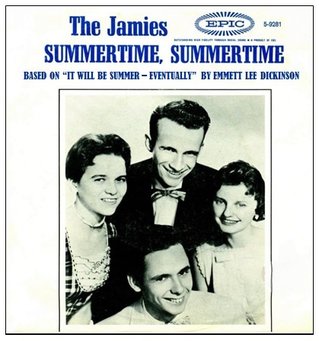
Of course, the first line states, “It will be Summer – eventually,” and that is most certainly true today! ’Tis the Solstice 2026! To celebrate the season, perhaps I’ll saunter through town with my cane (LOL – see line 3). In addition, as I stated earlier, the poem popped up in response to my search for the word “father” for “Father’s Day.” However, the word “father” is not used in the poem. “Forefathers” is used in line 12, but not “father” – so I was a bit surprised that the poem was included in the search results.
Interestingly, “Forefathers” is NOT used in reference to the late-18th-century revolutionary leaders who united the Thirteen Colonies, led the American Revolutionary War, and established the United States. Nope. Instead, the word refers to earlier generations of bees who hummed the same tune as this summer’s bees! I love it!
The poem has an interesting publication history too. At first it was published in the third series of Dickinson’s POEMS in 1896, edited by Mabel Loomis Todd, but not as the five stanza poem “It will be summer – eventually”; instead, it was printed as a four stanza poem entitled “Nature Changes" with the first line, “The springtime’s pallid landscape.” I’m not sure why the first stanza of the poem was omitted as Dickinson printed it in one of her fascicles (on sheet five of fascicle eighteen) as the five stanza poem.
In R. W. Franklin’s research, he stated that it was published in 1896 “with stanza 1 omitted and alterations in stanzas 2 and 3 by Mable Todd’s father, Eben Jenks Loomis.”
Say what? This is the first time I ever heard that Todd’s father was involved in the editing of any of Dickinson’s poetry.
Here’s info from Wikipedia on Mr. Loomis (HERE): “Eben Jenks Loomis (November 11, 1828 – December 2, 1912) was an American astronomer, born in Oppenheim, New York. He attended the Lawrence Scientific School (Harvard) in 1851–53. He was assistant in the American Ephemeris and Nautical Almanac office from 1850 until his retirement in 1900. During this time he also held the position of special assistant at the United States Naval Observatory in Washington, DC.”
Sooo…he was alive during the time when his daughter Mabel edited and published the three series of Dickinson’s poetry.
| On a whim, I ran a Google search on “Did Eben Jenks Loomis ever edit any of Emily Dickinson's poems” just to see what might pop up. I wasn’t surprised that the “AI Overview” responded “No,” as I don’t think the info provided by R. W. Franklin is widely known; however, I was surprised when the info provided stated that the poems were “edited by his wife, Mable Loomis Todd” – Mabel Loomis Todd was his daughter. The AI overview also stated that E J Loomis was “a personal acquaintance of Dickinson who corresponded with her during her lifetime.” Well, that’s about 10% true. |
Back to the poem: You'll notice that Dickinson extracted a few lines from the poem (from the 4th stanza of the five-stanza poem), and she sent those to friend Samuel Bowles. Again, Johnson in his research stated, "These lines were sent to Samuel Bowles in March 1862. Austin Dickinson visited Bowles on March 5 of that year, probably delivering this note." The Johnson edition of Dickinson's "complete" poems includes these lines as a separate poem (J331), but the Franklin and Miller editions do not.
RSS Feed